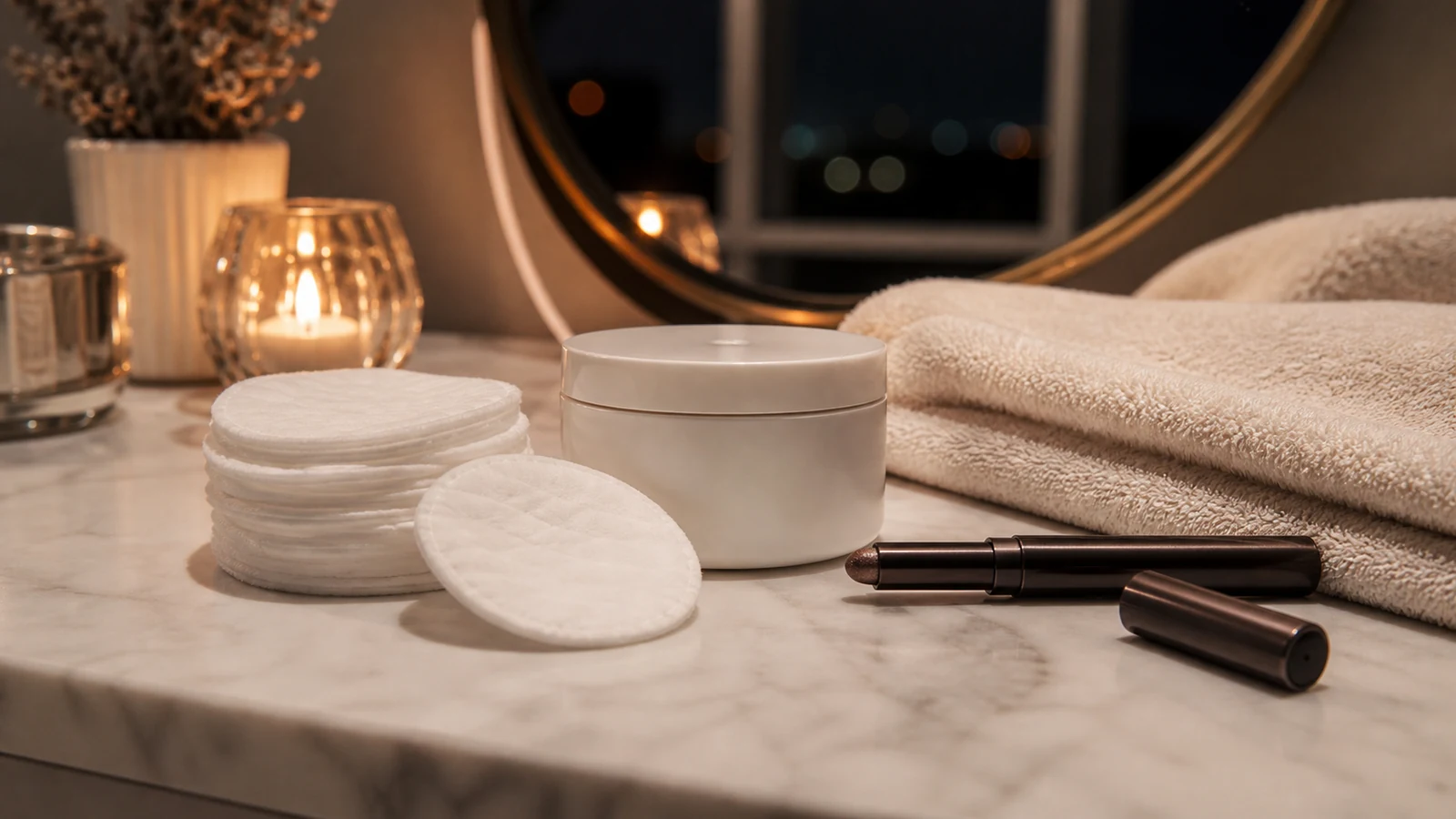
How to Remove Waterproof Eyeshadow Stick Without Scrubbing
Direct answer: remove waterproof eyeshadow stick by dissolving the film first, then wiping gently. Do not attack it with repeated rubbing. Use a remover suitable for eye makeup, hold it on the closed lid briefly, wipe in one direction, rinse if the product directions say to, and stop if your eye area stings, swells or stays irritated.
This is a practical removal guide, not medical advice. The eye area is delicate, and long-wear makeup is only useful if removal is comfortable enough for real life.
Gentle Removal Checklist
- Read the product and remover directions. Check whether the remover is intended for eye-area makeup.
- Wash your hands first. Keep residue away from the lash line.
- Soak a pad, do not scrape dry. A dry pad creates friction before the formula has loosened.
- Press, pause, then wipe. Give the remover time to break down the film.
- Use one-direction wipes. Avoid back-and-forth rubbing over the eyelid.
- Repeat gently if needed. If it still will not move, add remover and pause again rather than pressing harder.
- Stop for irritation. Burning, swelling or rash is not a normal “long-wear” trade-off.
Why Dissolve Before Wiping?
Waterproof and long-wear products are designed to resist quick movement and moisture. If you try to remove them like ordinary powder shadow, the friction lands on your eyelid. Dissolving first moves the work to the remover. That is why cleansing balm, oil-based remover or a dedicated eye makeup remover is often more comfortable than repeated cotton-pad rubbing.
Do not use harsh household oils, random solvents or exfoliating products near the eye to force removal. The goal is controlled cosmetic removal, not stripping the skin.
What To Check Before You Buy Long-Wear Eye Makeup
Removal should be part of the purchase decision. GOV.UK says cosmetic products should provide key information including precautions and ingredients. If you already know you react to certain ingredients, do not wait until bedtime to discover the label is unclear. Check packaging and ask the retailer before use if needed.
Advertising language also deserves caution. ASA CAP beauty guidance warns against exaggerated beauty product effects and unsupported claims. A waterproof or no-budge claim should not be read as “safe for every eye” or “no side-effects for anyone”.
Stop Conditions
Stop removing and seek suitable advice if your eyelids swell, burn, develop a rash, or stay irritated after the makeup is gone. Stop testing a product if every use needs forceful removal. Stop if remover enters the eye and discomfort continues. If you suspect allergy, the British Association of Dermatologists describes patch testing as a specialist process for investigating contact allergy; that is different from trying more products at home.
Make Removal Easier Before Application
Removal starts when you apply the product. A thin layer is easier to dissolve than a thick layer pressed into the lid. If you want more intensity, build gradually and stop before the texture becomes heavy. This matters especially with shimmer, because extra layers can make you rub more at the end of the day.
Keep the lash line conservative unless the product directions clearly support that use. The closer product sits to the eye, the more careful removal becomes. If you wear contact lenses, remove makeup in the order recommended for your lens routine and avoid letting remover flood the eye area.
It is also worth testing removal on a quiet evening before wearing the product for a long event. Apply the stick, let it set, then remove it after a few hours. If the remover you own struggles, solve that problem before you rely on the product for work, travel or a wedding guest look.
Common Removal Mistakes
The first mistake is waiting until you are tired and impatient. Long-wear eye makeup needs a small amount of time. If you know you will come home late, put the remover and pads out before leaving. That tiny preparation makes it less tempting to scrub.
The second mistake is using more pressure instead of more dissolving time. If the pad comes away almost clean but the shimmer remains, re-soak and pause. If the pad drags, the remover has not done enough work yet.
The third mistake is ignoring the next morning. If your lids feel tender after removal, treat that as feedback. A look that is easy to apply but hard to remove may not belong in your daily routine, even if it survives the day.
Negative Fit
A waterproof eyeshadow stick may not be right for daily use if you have very reactive eyes, dislike oil-based removers, wear contact lenses and often get residue in the eye, or need to remove makeup quickly in a shared bathroom after late shifts. In those cases, a shorter-wear cream or powder shadow may be more realistic.
How Langmanni Fits
The Langmanni L2350 A set details page is relevant if you want an eight-piece stick format for eye colour, highlighting and contouring. Before using any long-wear eye product, plan removal first and check the packaging directions, especially because the same-site page advises following packaging directions around the eye area.
FAQ
Can I use micellar water?
Use it only if it is suitable for eye makeup and works without rubbing. If it needs repeated pressure, switch to a more appropriate remover.
Should I pull the eyelid tight?
No. Keep the eye closed and support the skin gently. Pulling tight encourages friction.
Is waterproof makeup bad for sensitive eyes?
Not automatically, but sensitive-eye users should be more cautious about ingredients, remover choice and stop signs.